

Curated Routes: Paris — Using Tea as a Compass
The Tea Squirrel has always been about the pursuit of the perfect cup, alongside the beauty, rituals, and creativity that surround it. As my work evolves, I’m thrilled to introduce a new series: Curated Routes. Whether exploring my adopted home of Los Angeles or traveling further afield, tea is no longer just the destination; it's the compass we’ll use to dig deeper, uncovering the intentional spaces, curated objects, and sensory experiences that make a place worth finding.
For our first route, let me guide you through the streets of Paris—specifically Saint-Germain-des-Prés on the Left Bank. Here is a curated itinerary mapped out not just by geography, but by the senses: where to find modern rituals, historic architecture, and the kind of exceptional craftsmanship that invites true contemplation.
The Anchor: A Modern Ritual
Jade Matcha Gallery | Matcha París
Jade Matcha Gallery
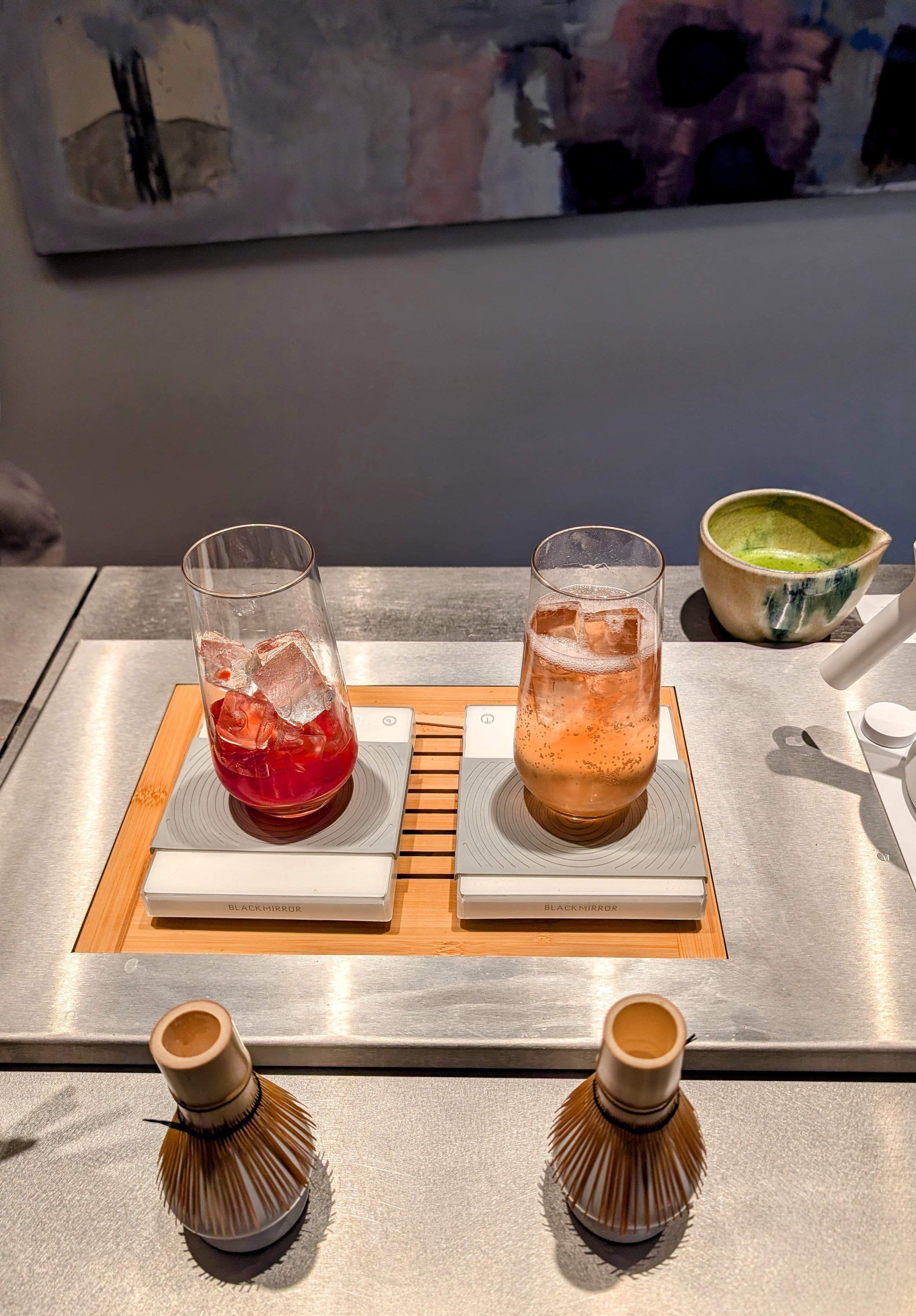
Every route needs a grounding moment. Let's begin with a modern ritual at Jade Matcha Gallery. The space is clad floor-to-ceiling in brushed stainless steel, and matcha is treated with true reverence here. We ordered two of their seasonal specials:
Matcha Spritz: Floral Tonic, Grapefruit Oleo, Pomegranate Oleo, Matcha. Notes: bright, sparkling, refreshing.
Strawberry Blush: Strawberry Oleo, Matcha, (Milk or) Water. Notes: fruity, delicate sweetness.
After watching the barista prepare our drinks with care, we took them upstairs to the art gallery. Enjoying them while contemplating the artwork and the view from the window—which looks right onto the side of the beautiful Église Saint-Sulpice—was the perfect sensory anchor. It is a beautiful example of using tea to create a quiet space for contemplation before stepping out into the vibrant yet chaotic energy of Paris.
Intentional Spaces & Architectural History
Église Saint-Sulpice
Église Saint-Sulpice
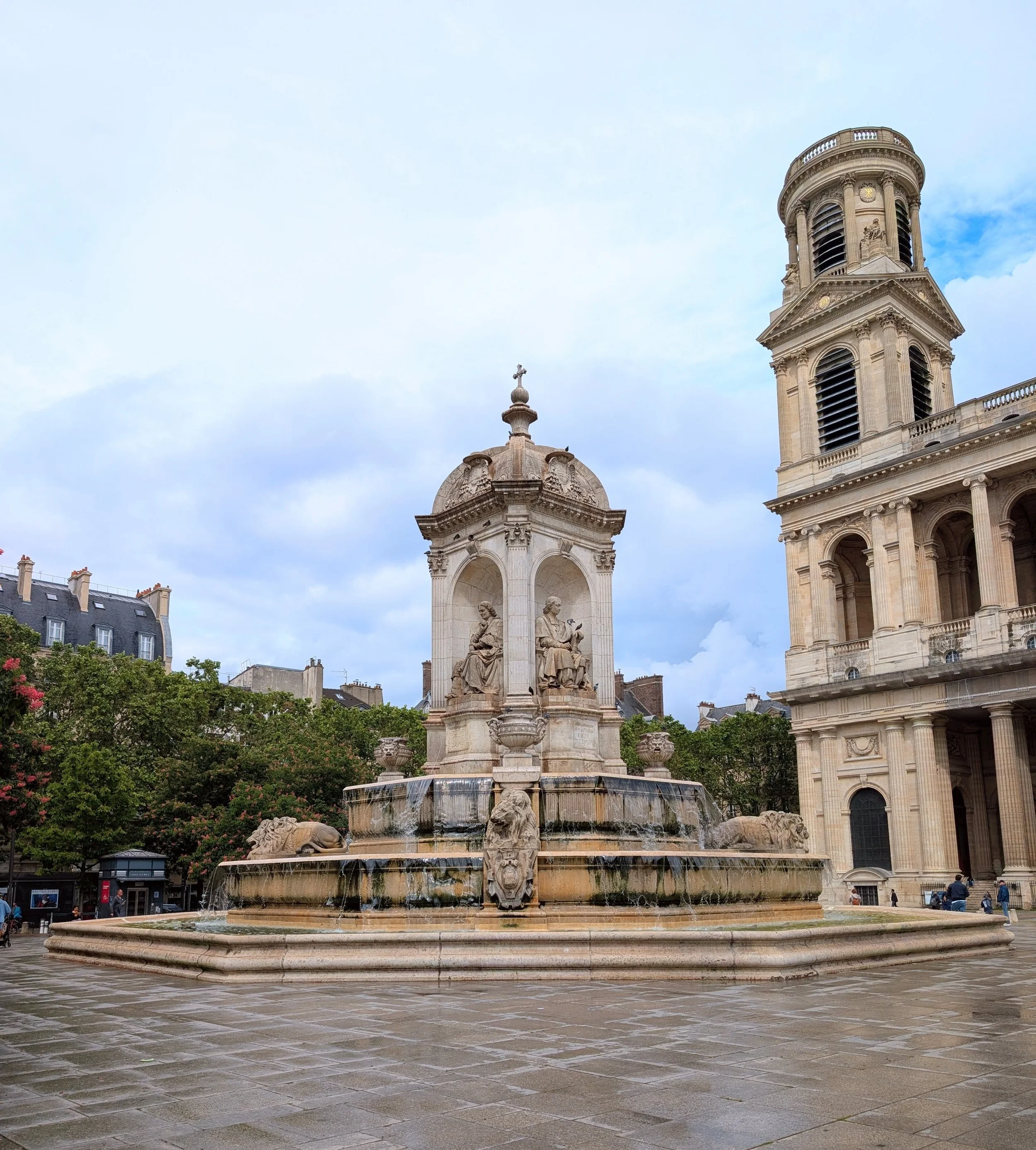
Stepping out of the modern, stainless-steel sanctuary of the matcha gallery, we only had to trace the exact view we had from the window to find ourselves at the foot of Église Saint-Sulpice. If you are expecting a traditional, symmetrical French Gothic cathedral, Saint-Sulpice is an immediate surprise. The moment you step into the square, the architecture transports you straight to southern Italy or Greece even, carrying a distinct Mediterranean warmth.
This is entirely by design. The facade was won in a 1732 competition by the Florentine-born architect Giovanni Niccolò Servandoni. Heavily influenced by his time in Rome, Servandoni bypassed traditional French Gothic constraints in favor of a proto-Neoclassical design. Sitting by the fountain, appreciating this grand, classical geometry and the way the light filters through the square, it becomes a natural continuation of our earlier contemplation.
Elevated Sensory Experiences: Olfaction & Taste
L'Artisan Parfumeur St Germain
Leaving the quiet geometry of the square, the route shifts from the visual to the aromatic. Tea is inherently tied to the world of olfaction, making a stop at L'Artisan Parfumeur a natural next stop. I originally walked in searching for an osmanthus perfume, hoping to capture the aromatic memory of the marvelous osmanthus oolong I found during my recent tea-sourcing trip to Taipei.
While that specific scent was a retired limited edition, the detour led to something even better. Shifting gears with the sales associate, she introduced me to Abyssae, which was an immediate love. It is described as a floral scent with notes of rose, eucalyptus and cashmeran. Rather than committing to a full-size bottle though, I opted for their Les Bois (Woody) Discovery Set—three perfumes housed in a beautifully refined leather pouch, perfect for travel. The set includes Abyssae, Ode À l’Oudh, and Il Était Un Bois. The latter was a wonderful surprise for a tea specialist: it features a prominent buckwheat note that instantly recalled the roasted, earthy comfort of a warm cup of Soba Cha.
Debauve & Gallais and Patrick Roger
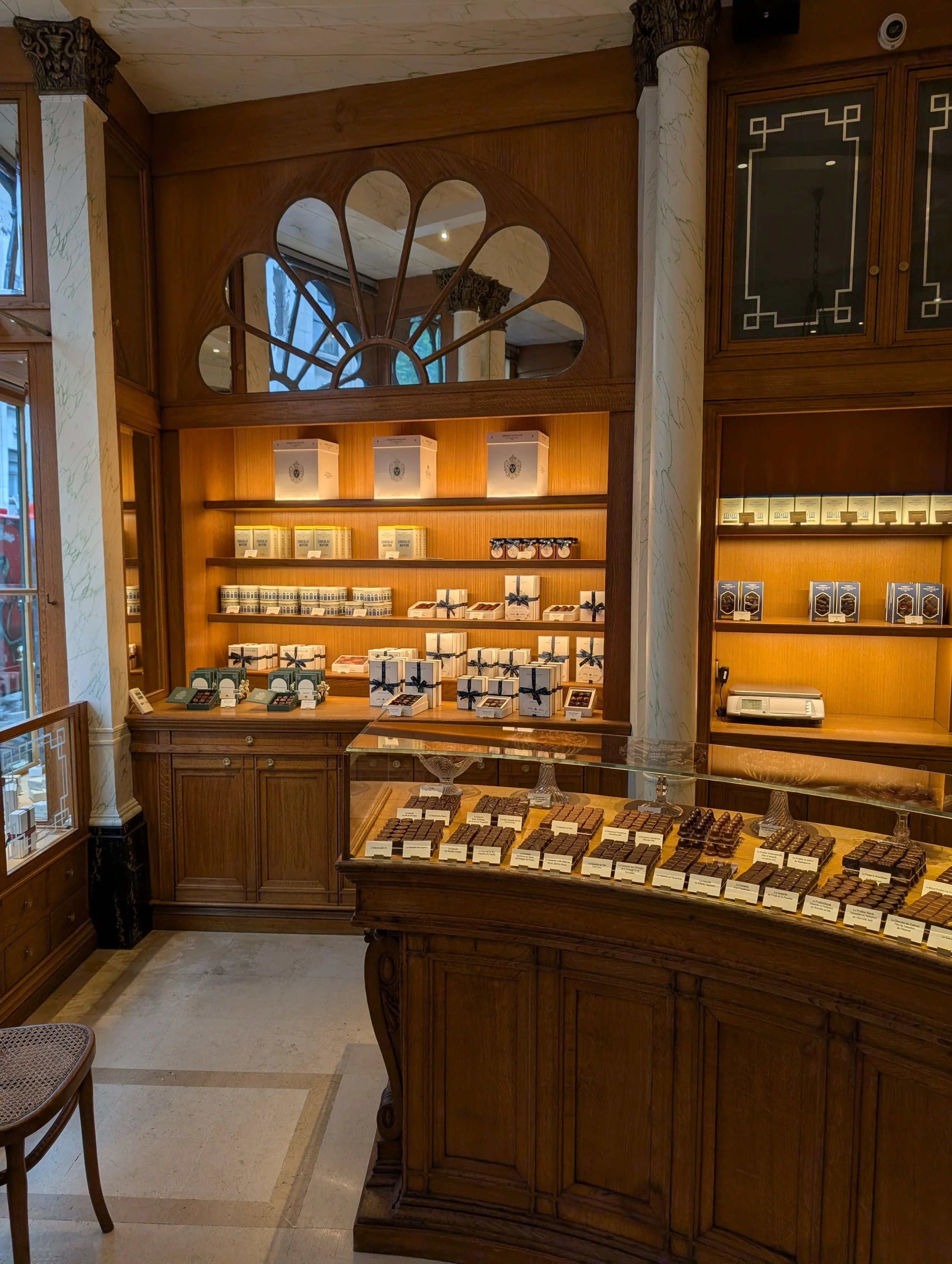
Debauve & Gallais
To bridge the gap between olfaction and taste, we explored two wildly contrasting philosophies of Parisian chocolate.
We started at the historically revered Debauve & Gallais. The aesthetic here is steeped in royal tradition. After sampling a classic chocolate truffle and an exquisite pistachio marzipan enrobed in chocolate, I ultimately chose to take home a box of their delicate marron glacés—the textural sweetness of creamy candied chestnuts providing a perfect structural counterpart to a complex, robust tea.
Just a short walk away is Patrick Roger, which offers the complete opposite aesthetic. The boutique feels more like a modern, avant-garde art gallery than a traditional chocolatier. Yet, despite the stark stylistic contrast, the dedication to flavor is just as uncompromising. Their signature lime ganache-filled chocolates are wonderfully irresistible, proving that whether a space is steeped in history or aggressively modern, exceptional craftsmanship always shines through on the palate.
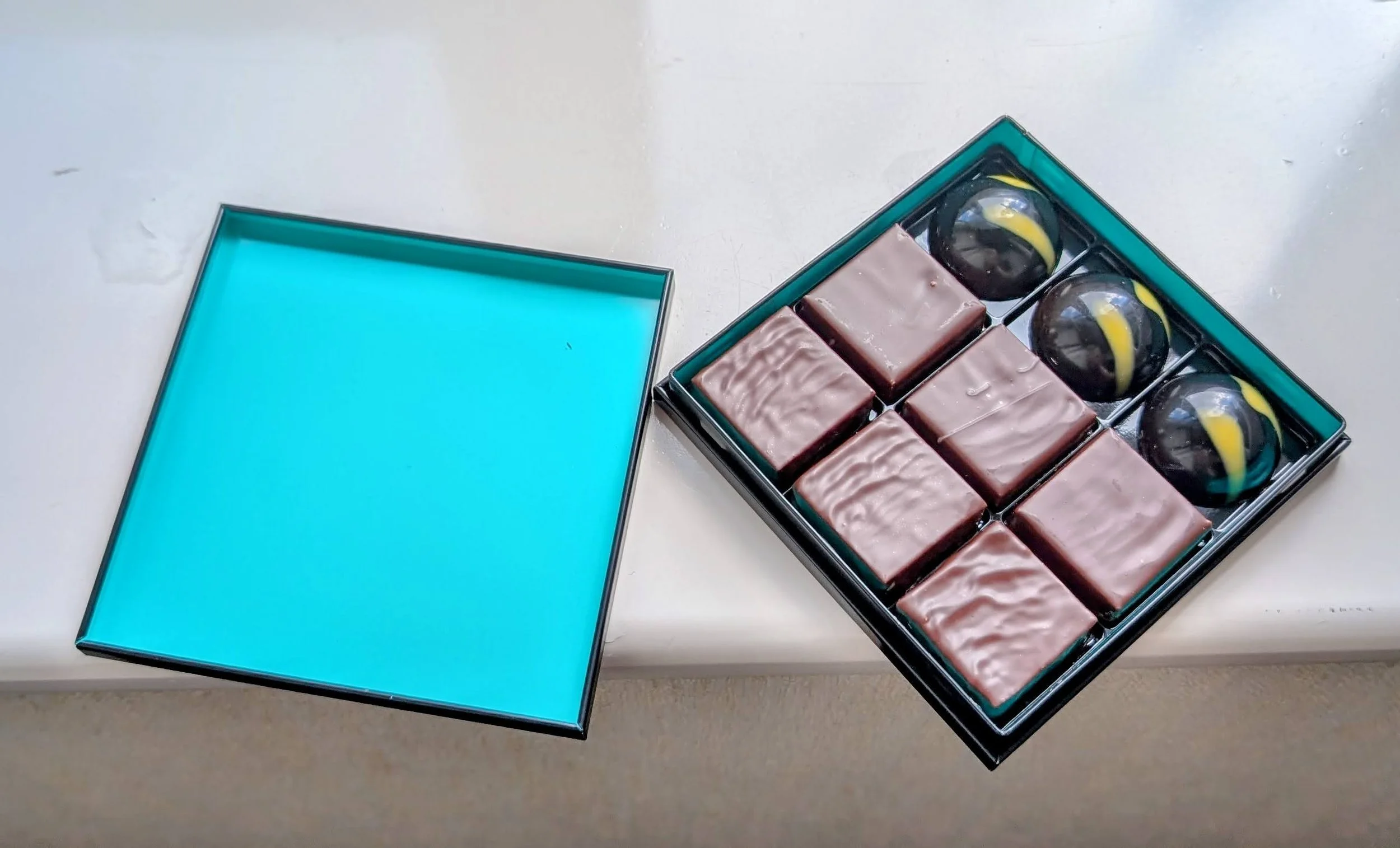
Patrick Roger
Curated Objects and Parisian Artisans
From the ephemeral world of scent and taste, our route turned toward the tangible. The ritual of tea has always been intimately connected to the objects we hold and the environments we create, leading us to a stretch of Saint-Germain dedicated to form, texture, and exceptional craftsmanship.
Rendez-Vous des Designers
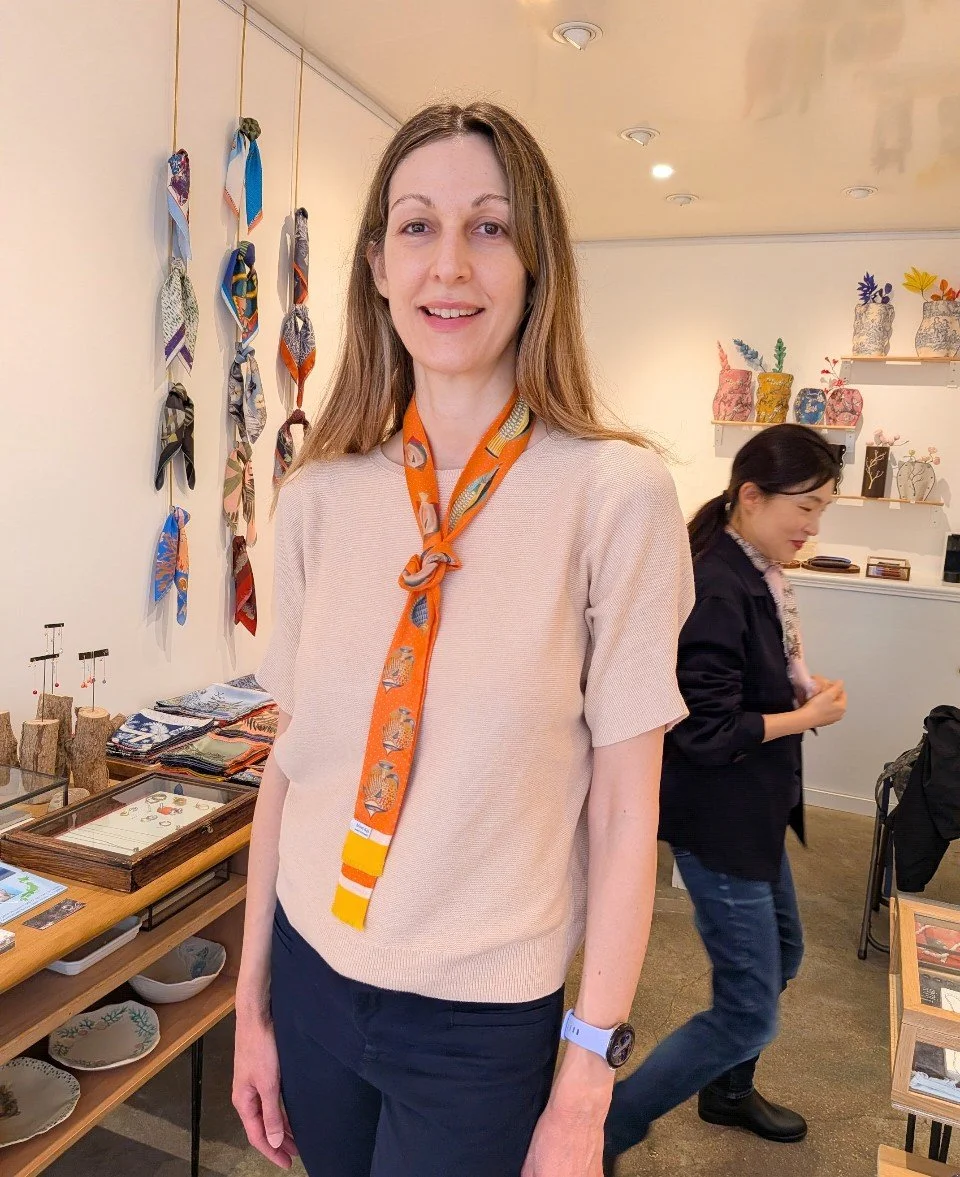
Trying on Mont Kiji silk scarves at Rendez-Vous des Designers
We began this exploration at Rendez-Vous des Designers, a unique cooperative where artists and artisans take turns manning their shared boutique. Everything sold here — including scarves, jewelry, sweaters, leather accessories, ceramics and decorative objects — is made by hand in France. I immediately fell in love with the fluid, visual poetry of the French silk scarves by Mont Kiji. The designer herself Junhee Kim was present, taking the time to walk me through the different patterns and the myriad of ways to drape and wear them. Before I purchased one to take home, she shared a fascinating detail: while many silk items on the market carry a "Made in France" label, they are typically constructed from silk imported from Asia. Not the case here. Having the opportunity to speak directly with the artist and understand the true integrity behind the materials was a beautiful celebration of authentic sartorial craftsmanship.
Alix D. Reynis
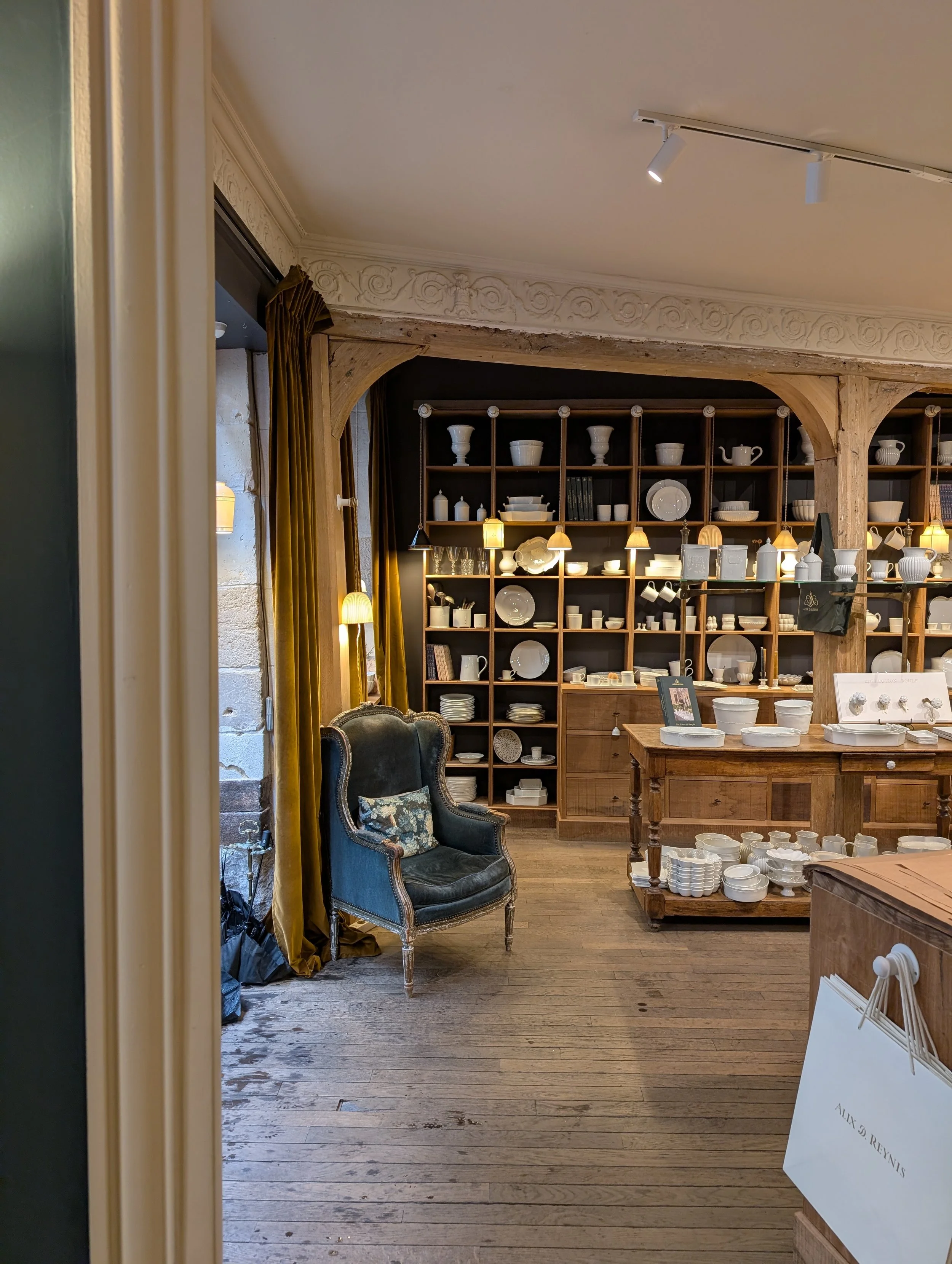
Alix D. Reynis
Moving from the drape of silk to the structure of porcelain, entering the boutique of Alix D. Reynis is a study in tactile elegance. Her work in Limoges porcelain and finely crafted textiles brings a delicate beauty to everyday items. As a tea specialist who spends a significant amount of time contemplating the vessels we drink from, I deeply appreciate the artistry here; her ceramics possess a refined, timeless quality that perfectly mirrors the elegance of a thoughtful tea service.
The Culinary Culmination
Oktobre
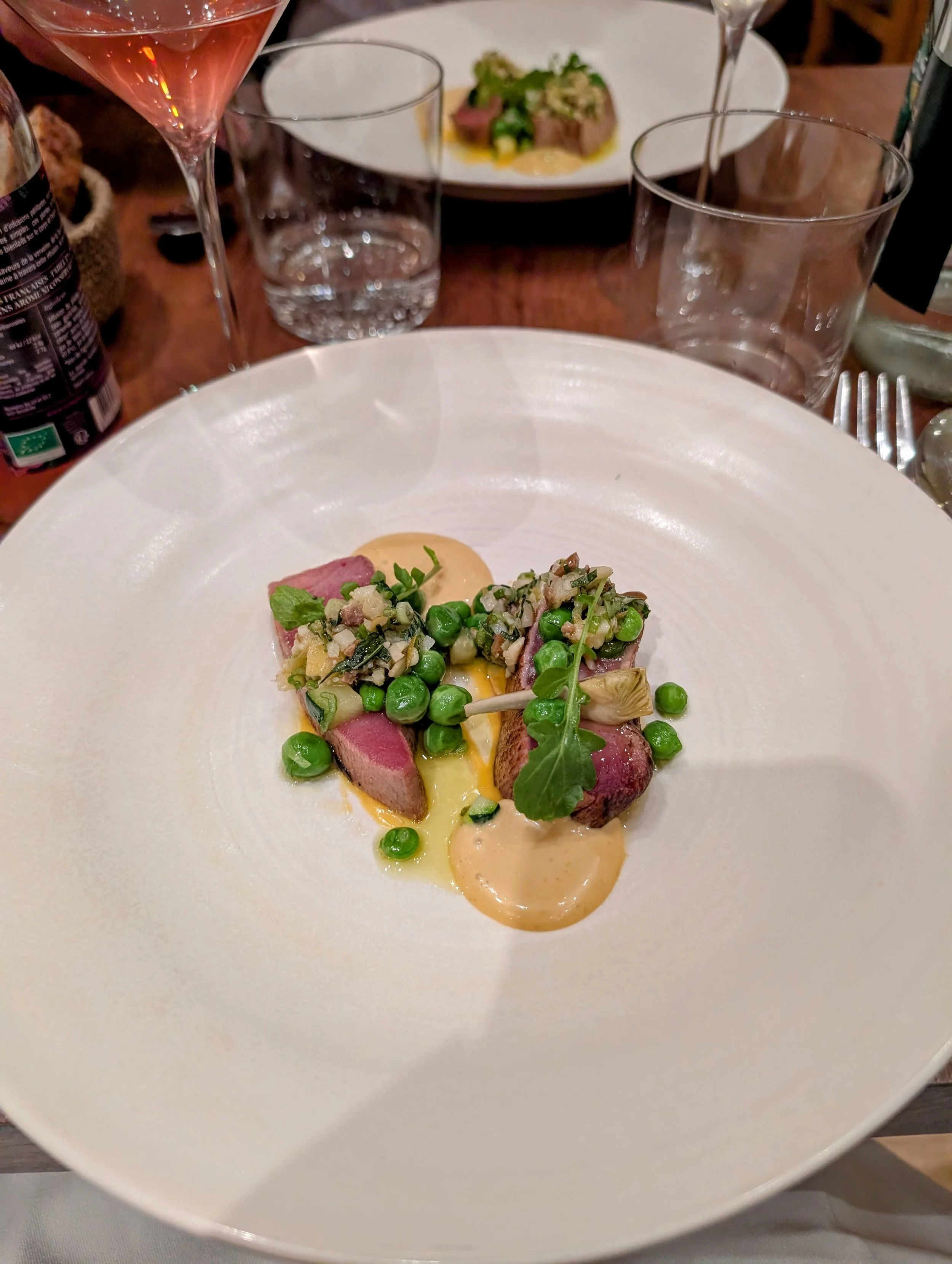
Tuna and with tender spring vegetables at Oktobre
As the afternoon light fades, the pursuit of elevated flavor profiles moves from the teacup to the dinner plate. Our culinary culmination begins at Oktobre. Stepping inside, the interior immediately wraps you in an unexpected warmth. With its rich ochre tones, thoughtful tile work, and striped banquettes, the space carries a vibrant, design-forward energy that surprisingly evokes the atmosphere of a beautiful spot in Mexico City, right in the heart of Saint-Germain.
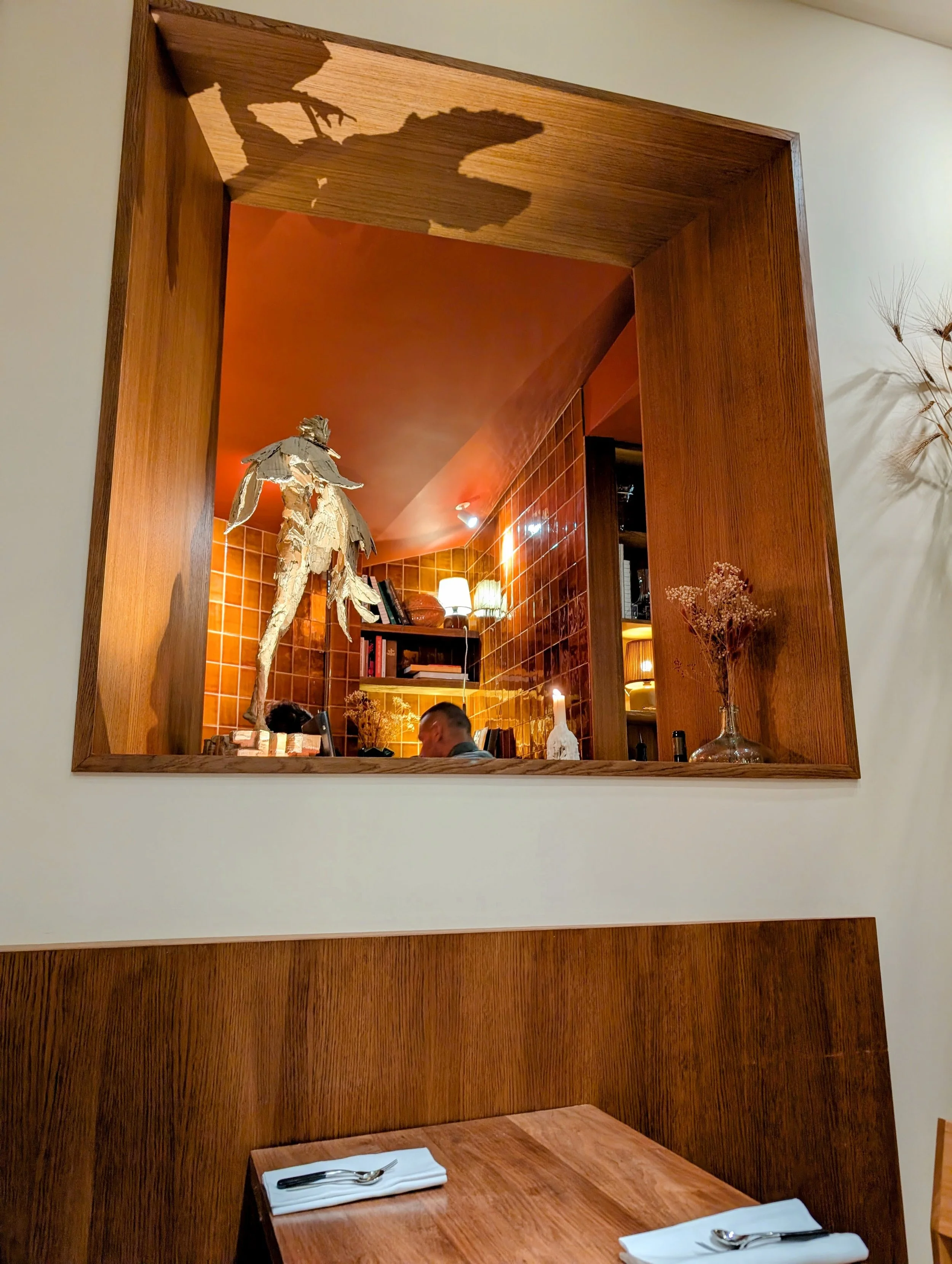
The interior at Oktobre
Their approach to dining is just as deliberate as their design. Oktobre offers a beautifully paced tasting menu, and from a culinary standpoint, their execution is flawless. Navigating a strict gluten-free diet in Paris can sometimes be a puzzle, but the kitchen here adapted the tasting menu with ease. Rather than making heavy-handed substitutions, they managed the progression with minimal omissions, allowing the clean, high-quality ingredients and technique to shine through completely uncompromised.
Because navigating a new city can be overwhelming, I made you a custom Google Map with every spot mentioned. You're welcome!